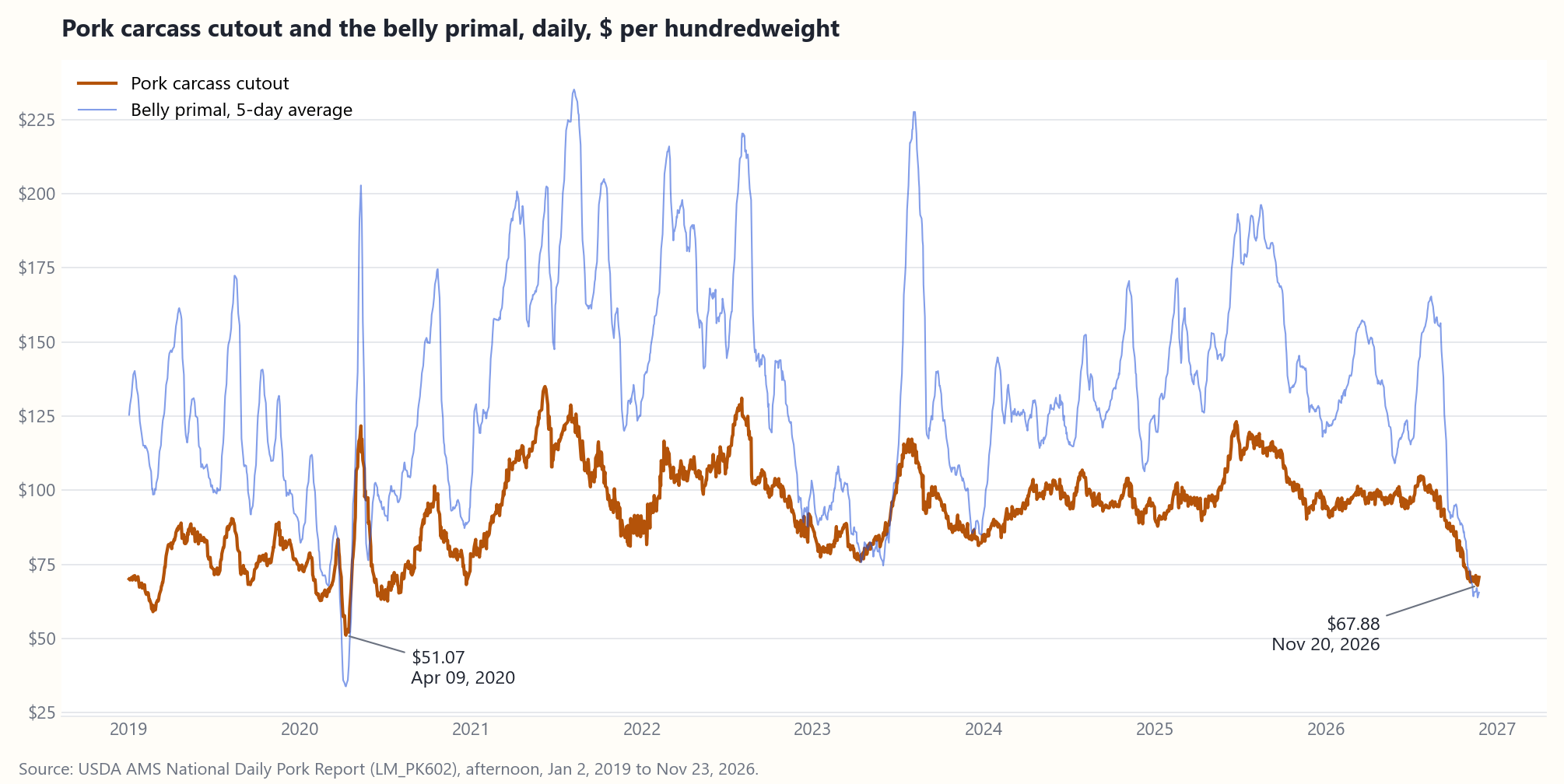
Wholesale pork is the cheapest it has been in six years. On November 20, 2026, USDA's pork carcass cutout closed at $67.88 a hundredweight, its lowest since August 2020. The belly closed at $56.11, its lowest since April 2020. On November 23 the cutout stood at $70.63, 25 percent under a year earlier.
Primal by primal
Every primal is under last year. The belly has fallen furthest, the butt least.
| Primal | Nov 23, 2026 | A year earlier | Change | 2026 high | Off the high | Recent low | Lowest since |
|---|---|---|---|---|---|---|---|
| Carcass | $70.63 | $93.78 | -25% | $104.82, Jul 21 | -33% | $67.88, Nov 20 | Aug 2020 |
| Belly | $75.27 | $130.83 | -42% | $165.87, Aug 10 | -55% | $56.11, Nov 20 | Apr 2020 |
| Ham | $62.99 | $83.80 | -25% | $105.95, Jul 21 | -41% | $59.29, Oct 28 | Feb 2022 |
| Loin | $66.08 | $84.97 | -22% | $99.39, Jun 5 | -34% | $65.92, Nov 20 | Sep 2020 |
| Picnic | $59.39 | $80.76 | -26% | $83.60, Jun 5 | -29% | $49.98, Nov 4 | Mar 2022 |
| Rib | $132.60 | $151.20 | -12% | $188.34, May 26 | -30% | $120.27, Nov 11 | Sep 2024 |
| Butt | $98.48 | $108.04 | -9% | $151.92, May 28 | -35% | $92.38, Nov 4 | Jan 2023 |
The belly moves fastest in both directions. It went from $56.11 on November 20 to $75.27 on the next trading day.
A normal fall, made deeper
Pork falls every year from its high into November. From 2013 to 2025, the November average ran between 7 and 33 percent under the year's high. In 2026 it is 33 percent under, the deepest in USDA's record, just past 2020. USDA's economists note the cutout has been under the year before every month since May.
Why, by USDA's account
USDA's November outlook puts October hogs at $55.69 a hundredweight, 20 percent under October 2025, and the cutout at $78.39, 24 percent under. Packers' margins were about a third lower.
Supply is not the reason. Fewer hogs were slaughtered in October, and USDA puts 2026 pork production at about 27.7 billion pounds, up only 0.29 percent.
USDA reads the weak hog price as weak pork demand. It names three likely contributors: lower foreign demand, especially from Mexico; high gasoline prices squeezing food budgets; and relatively low chicken prices.
It ties two primals to specific causes. The ham, to Mexico: US pork exports to Mexico were 11 percent lower in September. The belly, to fewer visits to quick-service restaurants and a more value-minded shopper.
The freezers show it too. Pork in storage at the end of September was almost 10 percent above a year earlier, mostly bone-in hams and loins, cuts that usually go for export.
What USDA expects
USDA forecasts fourth-quarter hogs at $53 a hundredweight, more than 18 percent under the fourth quarter of 2025. It expects lackluster demand into at least part of 2027 and lower prices in the first half: $58 in the first quarter, $63 in the second. It puts 2027 production up 0.61 percent.
At the store
The fall has not reached the meat case in the same measure. In October the gap between what pork costs at retail and what it fetches at wholesale was the widest on USDA's record. The article on how the pork cutout reaches the shelf covers that gap.